Most conversations about knives start with blade steel — hardness, edge retention, corrosion resistance. But the handle material is what you actually touch every single time you use the knife, and it's often the deciding factor in how safe, comfortable, and reliable a knife feels in real-world conditions: rain, sweat, cold, or blood on your hands while field dressing game. A great blade paired with the wrong handle material can still leave you with a knife that lets you down when it matters.
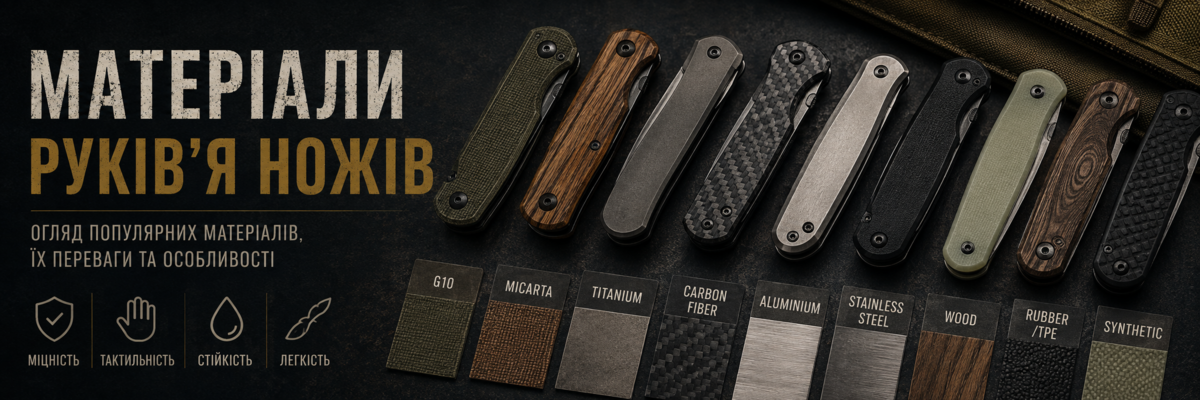
This guide breaks down nine of the most common knife handle materials — G10, Micarta, titanium, carbon fiber, aluminum, stainless steel, wood and other natural materials, rubber/TPE, and synthetic polymers. For each one, you'll get a quick overview, honest pros and cons, and the specific use cases where it shines — whether that's daily EDC carry, backcountry camping, hunting, or tactical work. We'll wrap up with a practical "how to choose" section and answers to the questions people ask most.
G10: The Workhorse of Tactical and EDC Knives
G10 is a fiberglass-epoxy composite made from layers of glass cloth soaked in resin and compressed under high pressure. It's one of the most widely used handle materials in modern folding and tactical knives, and for good reason.
Pros:
- Extremely strong and impact-resistant
- Doesn't absorb moisture, rot, or warp with temperature swings
- Excellent grip even with wet or sweaty hands, especially with textured or checkered surfaces
- Low maintenance — just wipe it down
- More affordable than titanium or carbon fiber
Cons:
- Feels more "technical" than warm materials like wood
- Textured G10 can wear on pocket linings and sheaths over time
- Less visually elegant than wood or horn for collector pieces
Best for: everyday carry (EDC), tactical applications, and outdoor or hunting knives that need to survive rain, mud, and temperature extremes. If you're looking for knives with G10 handles built for daily hard use, this is one of the most dependable choices on the market.
Micarta: Warm, Character-Rich, and Built to Last
Like G10, Micarta is a layered composite, but it's made from cloth, paper, or linen soaked in phenolic resin. Unlike G10, Micarta develops a patina over time — the surface mellows, darkens slightly, and shows a distinctive grain pattern where the layers are visible at the edges.
Pros:
- Warmer and more "alive" in the hand than G10
- Very strong and long-lasting
- Actually improves with age — the surface burnishes to fit the owner's grip
- Resistant to moisture and chemicals
- Attractive layered texture prized by collectors
Cons:
- More expensive than G10
- Smooth (non-textured) Micarta can get slippery when wet
- Color darkens over time from skin oils and handling
Best for: EDC knives meant to last a lifetime, collector and semi-custom pieces, and anyone who appreciates a handle with character. The Micarta handle knives category is a solid pick if you want a balance of practicality and aesthetics.
Titanium: Lightweight, Corrosion-Proof, and Premium
A titanium handle is either a solid titanium alloy scale or a full metal frame. Titanium is considered a premium material in the knife world thanks to a rare combination of properties.
Pros:
- Lighter than steel at comparable strength
- Doesn't rust and resists corrosion from saltwater and chemicals
- Hypoallergenic
- Often machined or media-blasted for a textured, secure grip
- Effectively unlimited lifespan under normal use
Cons:
- Expensive
- Polished, untextured titanium can be slippery
- Feels cold to the touch in winter
- Scratches show clearly on anodized color finishes
Best for: premium EDC knives, dive and fishing knives (thanks to corrosion resistance), and collector-grade pieces. Within our titanium handle knives selection, look for a milled or blasted texture if you plan to carry it daily.
Carbon Fiber: Maximum Strength-to-Weight Ratio
Carbon fiber handles are made from woven carbon strands set in resin — the same category of material used in aerospace and motorsport for its exceptional strength-to-weight ratio.
Pros:
- Outstanding strength relative to weight — very light yet stiff
- Immune to moisture and corrosion
- Distinctive woven pattern that collectors love
- Doesn't transmit cold the way metal does
Cons:
- One of the most expensive handle materials
- Can crack under a sharp, localized side impact
- Smooth, untextured surfaces offer less secure grip
- Difficult and costly to repair if damaged
Best for: ultralight EDC folders where every gram counts, plus collector and status pieces. Browse carbon fiber handle knives if weight is your top priority.
Aluminum: The Sweet Spot Between Price and Performance
Aluminum handles, usually anodized (T6-6061 or aircraft-grade 7075), are a favorite among mid-to-premium knife makers looking to balance cost, weight, and durability.
Pros:
- Lightweight yet significantly stronger than plastic
- Anodizing adds a wide range of colors plus extra corrosion resistance
- Great value for the performance it offers
- Moisture-resistant
Cons:
- Softer than titanium — scratches and dents more easily
- Polished aluminum is slippery without added texture
- Conducts cold noticeably in winter
Best for: mid-range EDC knives, outdoor and camping knives, and anyone who wants a lighter handle without titanium's price tag. Check out aluminum handle knives for a well-rounded, budget-friendly option.
Stainless Steel: All-Metal Reliability
A stainless steel handle usually means a full-tang construction — blade and handle machined from a single piece of metal — or steel scales on a folder.
Pros:
- Maximum strength and impact resistance
- Moisture-proof and easy to sanitize — a hygienic choice for kitchen and hunting use
- Essentially unlimited durability
- Classic, instantly recognizable look
Cons:
- The heaviest material on this list
- Slippery without texturing, especially with wet hands
- Conducts cold
- Prone to visible (mostly cosmetic) scratches
Best for: full-tang survival knives, kitchen knives, and hunting knives where structural reliability matters more than weight.
Wood & Natural Materials (Horn, Bone): Tradition and Character
Wood (walnut, oak, rosewood, stabilized wood), along with horn and bone, are the oldest handle materials in existence — and they're still prized today for their one-of-a-kind look and feel.
Pros:
- Unique grain and texture — no two handles are identical
- Warm and comfortable in the hand, especially in cold weather
- Classic, organic aesthetic ideal for collector and gift knives
- Stabilized wood (resin-impregnated under pressure) is far more durable than raw wood
Cons:
- Untreated wood is vulnerable to moisture, cracking, and warping
- Needs occasional maintenance (oil treatment)
- Less impact- and abrasion-resistant than composites
- Premium wood species significantly raise the knife's price
Best for: collector, gift, and traditional knives (hunting knives, camp knives, kitchen knives) where aesthetics and tactile appeal matter more than extreme durability.
Rubber / TPE: Maximum Grip in Wet Conditions
Rubber inserts or thermoplastic elastomer (TPE) overmolds are often combined with other materials — plastic or metal — to boost grip security.
Pros:
- Best grip in the wet-hand category, hands-down
- Absorbs shock and vibration
- Soft and comfortable for extended use
- Inexpensive to manufacture
Cons:
- Less durable — can crack, harden, or turn tacky over time
- Vulnerable to UV exposure and temperature swings
- Harder to keep clean (dirt collects in the texture)
Best for: hunting and fishing knives, and any application where a secure grip in wet or bloody conditions is non-negotiable.
Synthetic Polymers (FRN, Zytel, Glass-Filled Nylon): Budget-Friendly Practicality
These are fiberglass-reinforced plastics — Zytel® and FRN (Fiberglass Reinforced Nylon) are the two most common — used widely in budget and mid-range knives.
Pros:
- Very lightweight
- Inexpensive, keeping overall knife cost down
- Resistant to moisture, chemicals, and corrosion
- Strong enough for most everyday tasks
Cons:
- Not as stiff or fracture-resistant as G10 or Micarta
- Can look and feel "plasticky"
- Less resistant to long-term UV exposure (becomes brittle over time)
Best for: budget EDC knives, backup or "just in case" outdoor knives, and anyone prioritizing low weight and low cost over premium looks.
How to Choose a Handle Material for Your Needs
There's no single "best" material — only the best material for your specific use case:
- Everyday urban carry (EDC): G10, Micarta, or aluminum — reliable grip at a reasonable price.
- Backpacking, camping, survival: G10 or full-tang stainless steel — built to handle moisture, dirt, and mechanical stress.
- Hunting and field dressing: rubber/TPE or textured Micarta — grip security in wet, slippery, or bloody conditions is essential.
- Tactical use: textured G10 or titanium — the right balance of strength, weight, and secure grip.
- Lightweight pocket folder: carbon fiber or aluminum — minimal weight without sacrificing strength.
- Kitchen and household use: stainless steel — hygienic and easy to sanitize.
- Collector piece or gift: wood, horn, titanium, or carbon fiber — aesthetics and uniqueness first.
Quick comparison table:
| Material | Weight | Grip | Water Resistance | Price |
|---|---|---|---|---|
| G10 | Light | Excellent | High | Mid |
| Micarta | Light | Very good | High | Mid-high |
| Titanium | Light-medium | Good (textured) | Very high | High |
| Carbon Fiber | Lightest | Moderate | High | Very high |
| Aluminum | Light-medium | Moderate (textured) | High | Mid |
| Stainless Steel | Heavy | Moderate | Very high | Mid-high |
| Wood/Natural | Medium | Moderate | Low-medium | Varies |
| Rubber/TPE | Light | Best | Medium | Low |
| Synthetic (FRN/Zytel) | Lightest | Good | High | Low |
FAQ: Common Questions About Knife Handle Materials
What's the strongest knife handle material? Stainless steel and titanium offer the highest impact resistance, and among composites, G10 leads the pack. Carbon fiber is light and stiff but can crack under a sharp, localized side impact.
G10 vs. Micarta — which is better for wet hands? Textured G10 typically offers slightly more aggressive grip in extreme wet conditions, while Micarta is more versatile and feels better over long-term use. For maximum grip in rain or when field dressing game, rubber/TPE is usually the top choice.
Does a titanium knife handle rust? No — titanium doesn't rust and is highly corrosion-resistant, even with saltwater exposure, which is why it's a popular choice for fishing and diving knives.
What's the best knife handle material for beginners? G10 or aluminum — they offer the best combination of price, durability, and reliable grip without needing any special maintenance.
Does a wood knife handle need special care? Yes — untreated wood should be oiled periodically to prevent cracking and drying out. Stabilized wood is much lower-maintenance and rarely needs any upkeep.
Find Your Perfect Knife
The handle material isn't a minor detail — it's what determines how safe and comfortable a knife feels every single day, whether you're carrying it around the city, packing it for a hike, or using it in the field. Now that you know the strengths and trade-offs of each material, you can choose a knife built for how you actually use it, not just one that looks good in photos.
Browse our full range of EDC, outdoor, and hunting knives in the shop, and find the handle material that's right for you.